Four Modules Help Škoda Auto Respond Faster to Production Issues
A wireless Andon system on a private LoRa network that lets line operators flag production problems at the push of a button.
Škoda Auto needs little introduction. The largest carmaker in the Czech Republic, with more than a century of history, builds cars driven all over the world, with production plants on three continents - in Europe, Asia, and Africa. The company prides itself on precision, efficiency, and minimizing errors. It wanted to monitor and evaluate its production process more closely and give operators a way to quickly call for help when needed. Our task was to create a device that would make this possible.
The Challenge
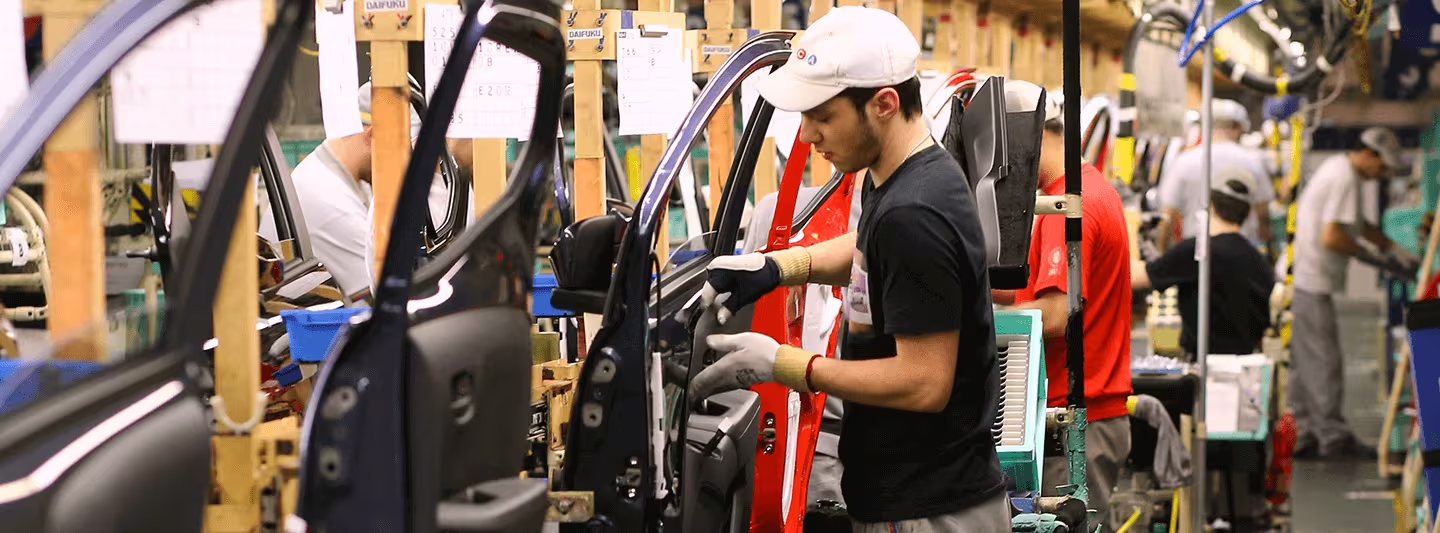
Before our Škoda Andon device was deployed, when a fault appeared on the line, operators had to phone the foreman on their own mobile or wave to them across the whole shop floor.
The inspiration for a better process came from Japan, where the Andon system of visual production control was developed. Boards placed around the line show the current status of each workstation and immediately flag problems as they arise.
Škoda needed a device to control such a board directly from the production line. Through the board, it had to alert the relevant operators so they could start solving a problem at once, while also informing management - who could then set better priorities and improve how the line runs.
The project brought several requirements:
- The device had to run on an independent network, so it could report line status even if the main network was unavailable
- The solution had to be as simple, reliable, and flexible as possible - small enough to fit tight spots on the line and easy to move later
- Implementation had to be fast and non-invasive, with no changes to the line technology, internal production processes, or the company network
The Solution
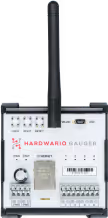
We built the final device from our BLOX IoT kit, connecting just four modules: a Core Module, a Battery Module, a LoRa Module, and external buttons. The Core Module provides the processing power and holds the firmware that defines the device’s behavior, the Battery Module powers it from AA batteries, and the LoRa Module connects it to a private LoRa network.
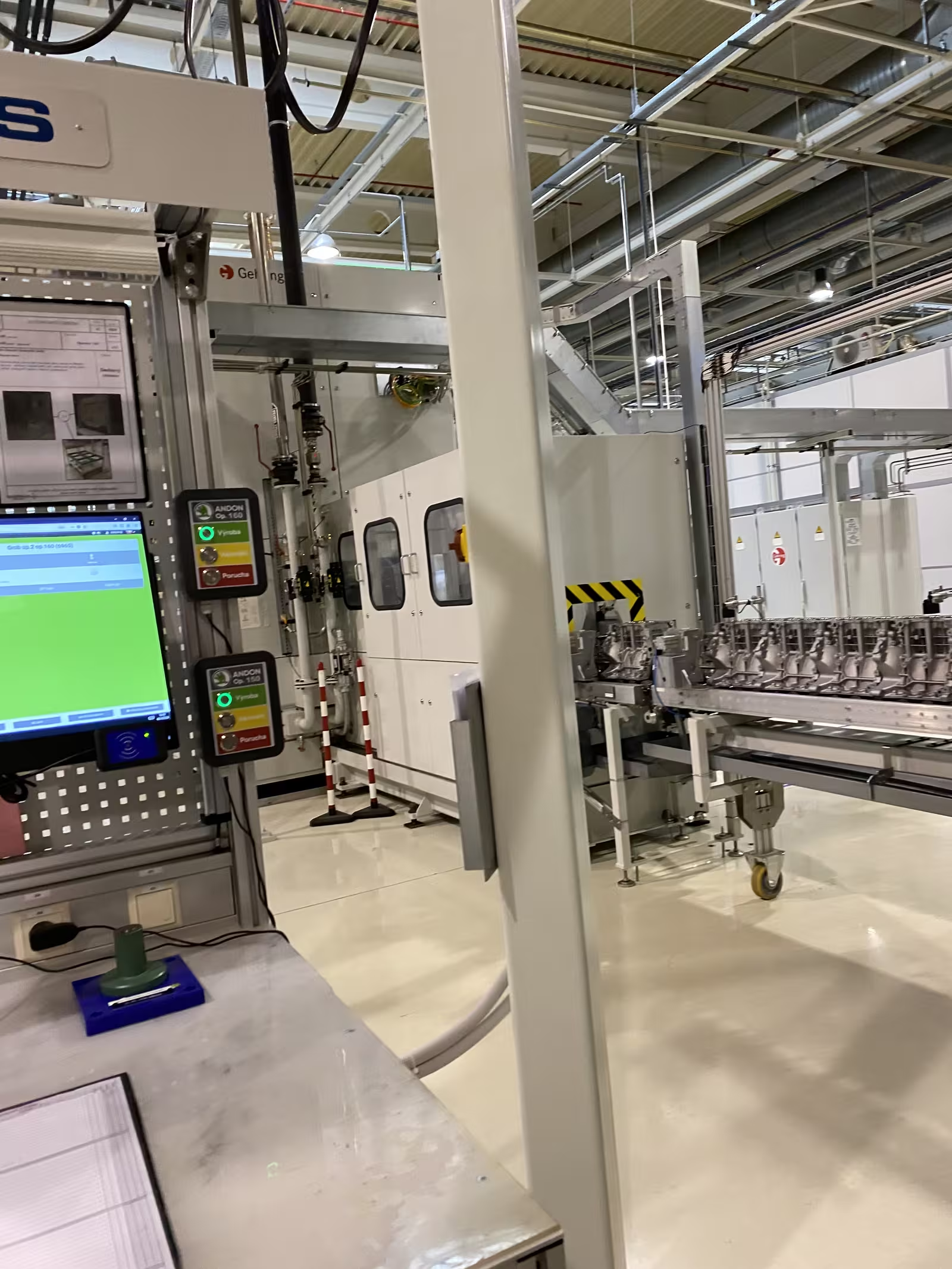
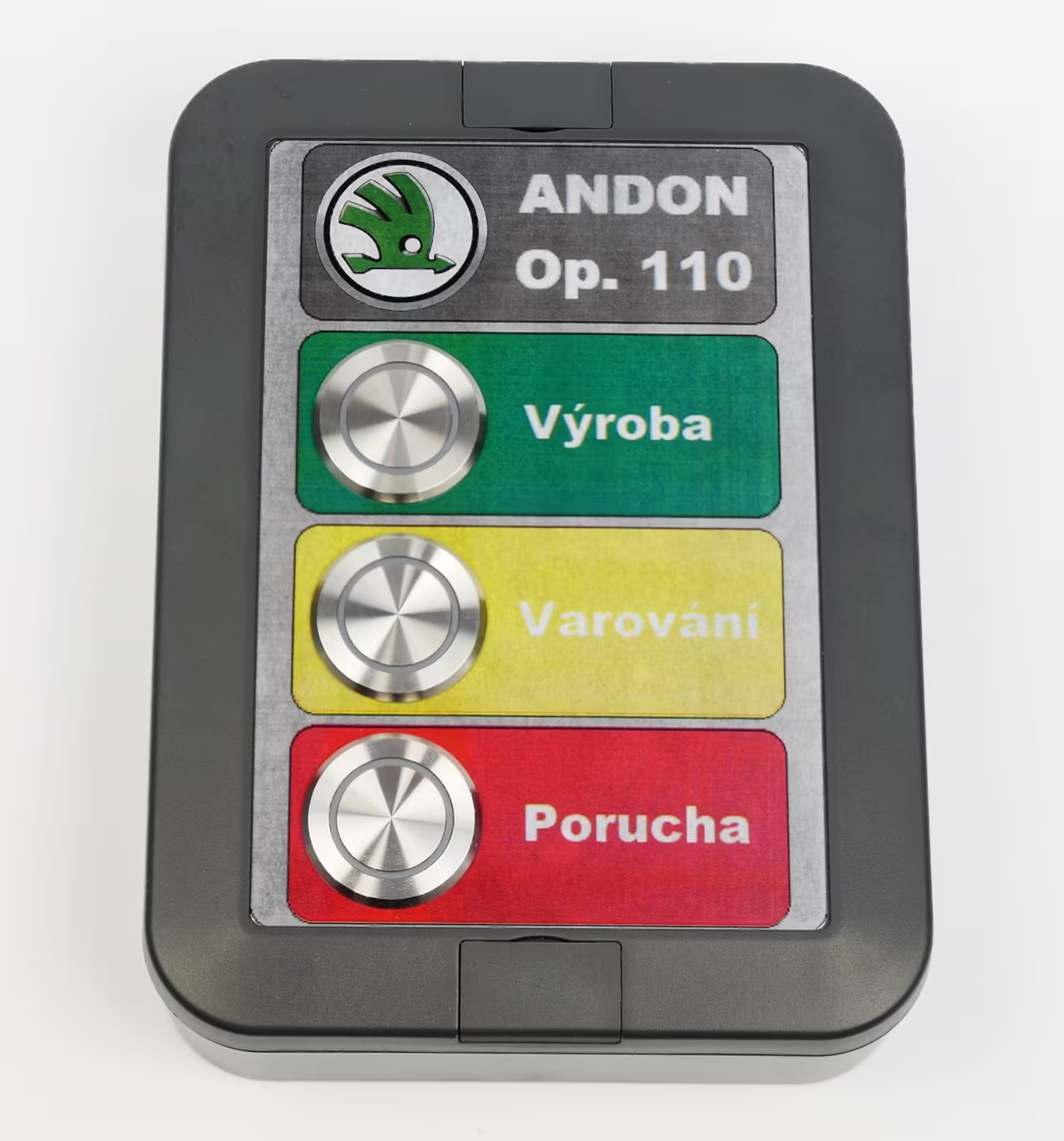
We enclosed everything in industrial housings with three color-coded buttons. For the visual boards we chose RGB LED strips, which easily display numbers, text, and symbols. The whole system integrates with the Microsoft Azure IoT Central, Microsoft Teams, and Microsoft Office 365 services Škoda uses, as well as with other platforms.
To let Škoda Andon send data, we set up a transmitter on the shop floor for a local, private LoRa IoT network. All data travels through it to the cloud, and the LoRa network keeps running even during a main-network outage - and can host further devices in the future.
How It Works
We installed devices with buttons and boards throughout production. When a line operator spots an issue, they press the Warning button, so technicians and supervisors immediately see that a problem has arisen in that production segment. If a serious fault occurs, the operator presses the Fault button, and they or their supervisor stop the line until the defect is fixed. Once the problem is resolved, the operator presses the green Production button.
Devices are placed all along the line so operators can use them at every key node. The boards, which clearly display status using traffic-light colors, are visible from every position, and they update in real time the moment a button is pressed.
Results
We tested the device and it proved itself. Building the Škoda Andon prototype and collecting the first data took roughly two weeks, and within two months the new system was in live use.
Since deployment, Škoda’s production lines are safer and easier to oversee. Employees can glance at a board on the wall and know production is running as it should. If a problem does occur, the board alerts them quickly, significantly speeding up the corrective process and clarifying priorities. Škoda Andon also collects long-term data on warnings and faults, giving management valuable input for changing production flow, redesigning processes, making technical improvements, and assessing operator quality.
“HARDWARIO helped us bring a solution into production quickly and non-invasively - one that lets us track the current status of the line and easily check whether any operator needs help.”
Jan Vlačiha, Expert Coordinator, Škoda Auto
Related Products
Related Articles
HARDWARIO and DeltaVue: Satellite monitoring of infrastructure from Arctic roads to Brazilian mines
HARDWARIO and Statotest: Smarter Infrastructure Monitoring with IoT Technologies