HARDWARIO IoT Device Durability Testing
Our devices are designed for demanding outdoor settings. We conduct tests under harsh conditions using climate chambers and IP testing.
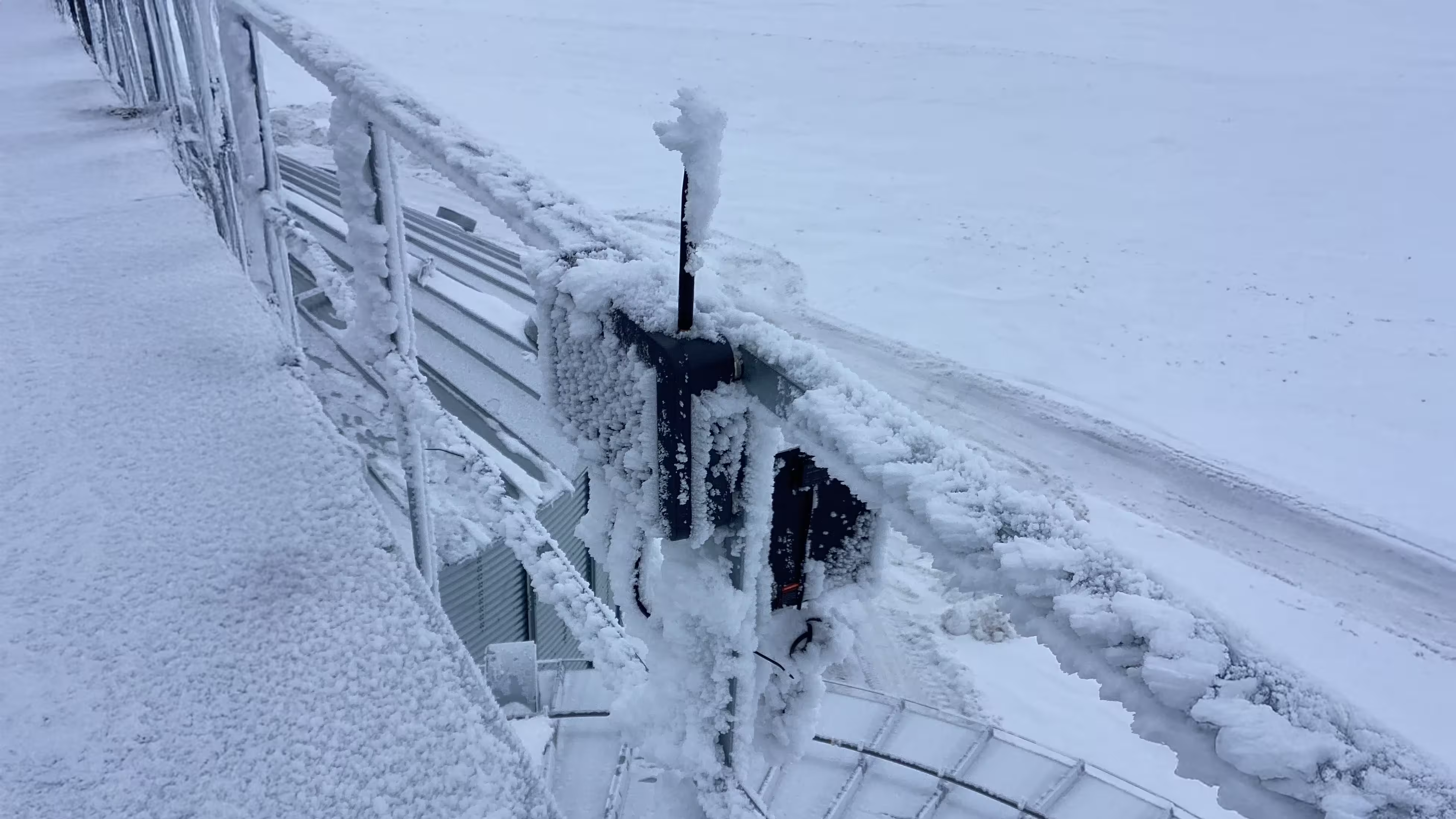
Our devices are designed not only for indoor environments such as shopping centers, production halls, or hospitals, but also for demanding outdoor settings like agriculture, industry, or construction. We conduct tests under harsh conditions to ensure our products can withstand extreme stress.
Climate Chamber
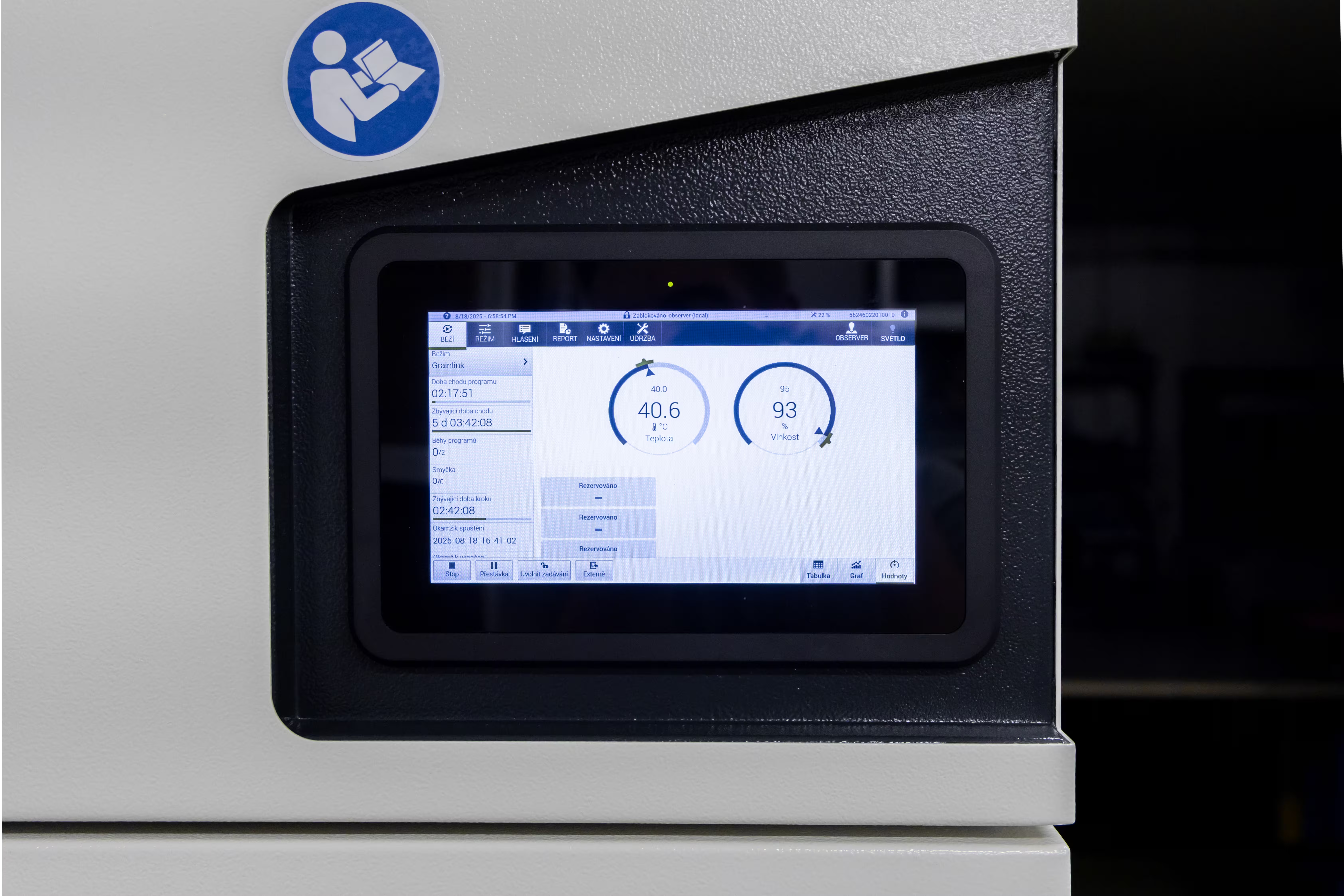
When developing a new product, we want to ensure it will operate reliably even in unusual and challenging conditions. Our HARDWARIO Studio uses a climate chamber that allows us to simulate temperatures from -40 to +170 degrees Celsius and control humidity within a 0-100% range.
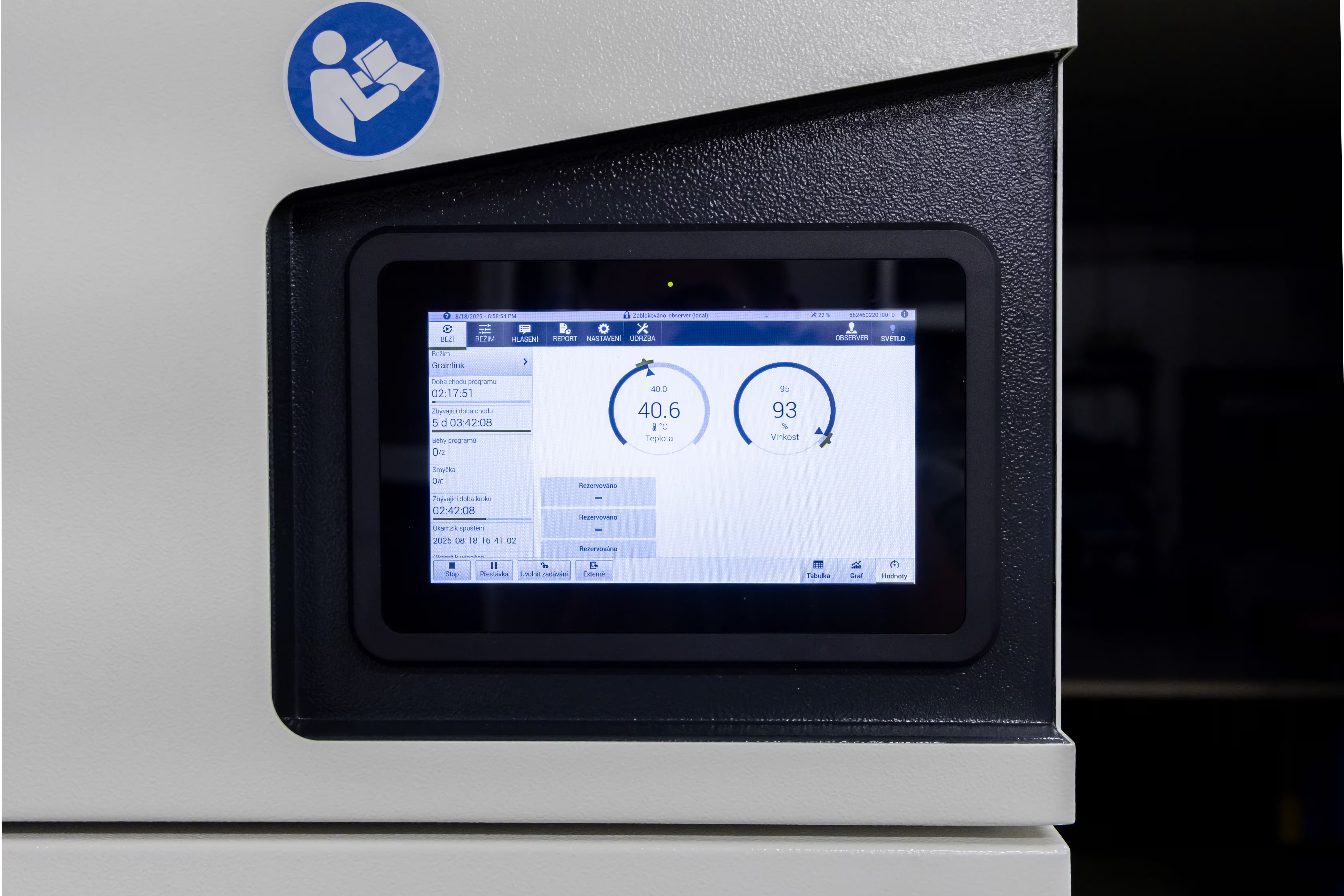
During test design, we identify the most temperature-sensitive component. In most cases, this is the plastic enclosure or the battery, with an operating range typically between -20 and +60 degrees Celsius. We select electronic components with a broader range than mechanical ones, usually from -40 to +85 degrees Celsius.
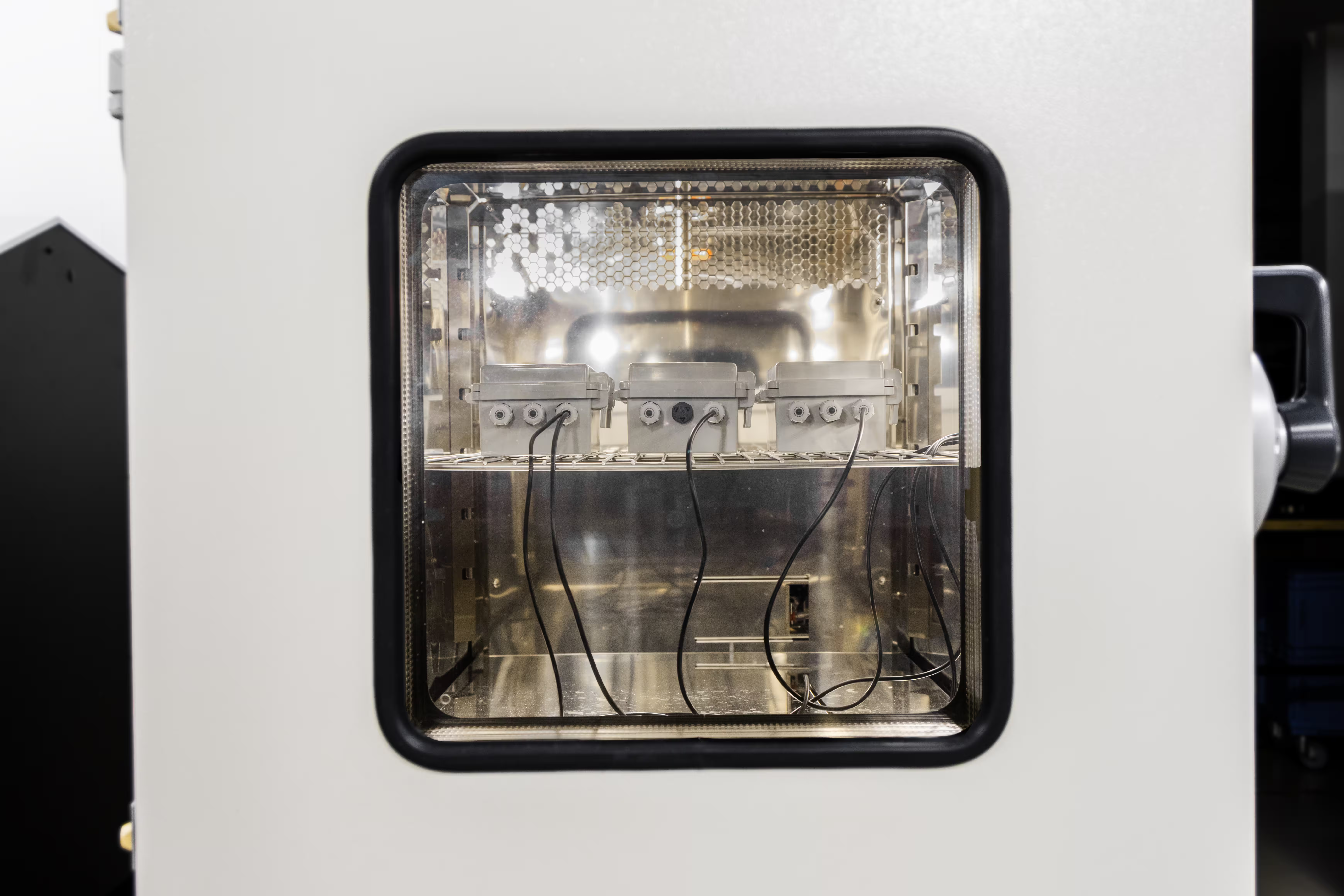
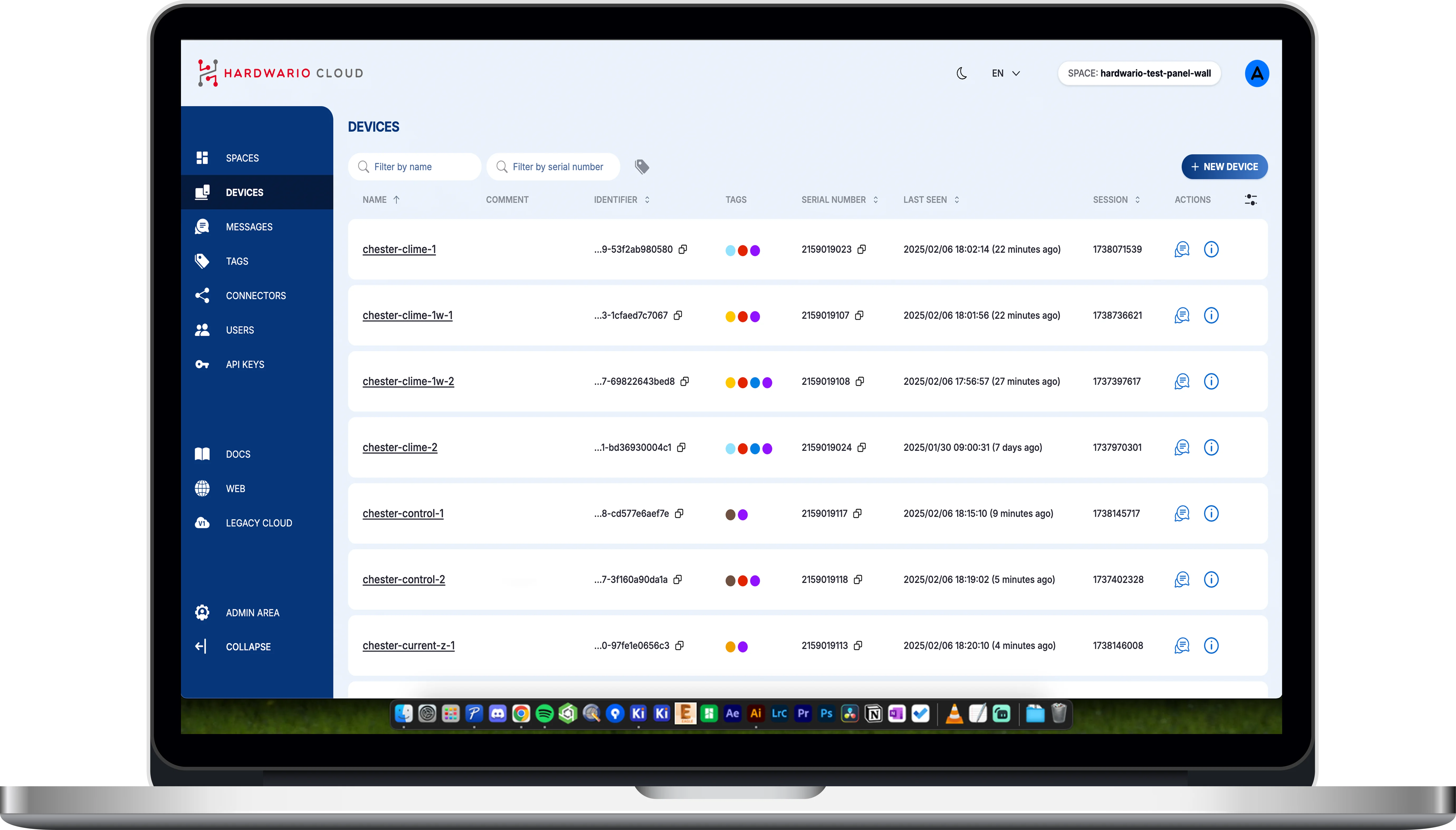
We then set the required conditions in the climate chamber, for example, cycling the temperature from -20 to +60 degrees Celsius while regulating humidity, and run the test for several days. The device’s antenna is exposed, so it continuously transmits data to the cloud during the test. This allows us to monitor any abnormal behavior remotely, and we record the results in graphs.
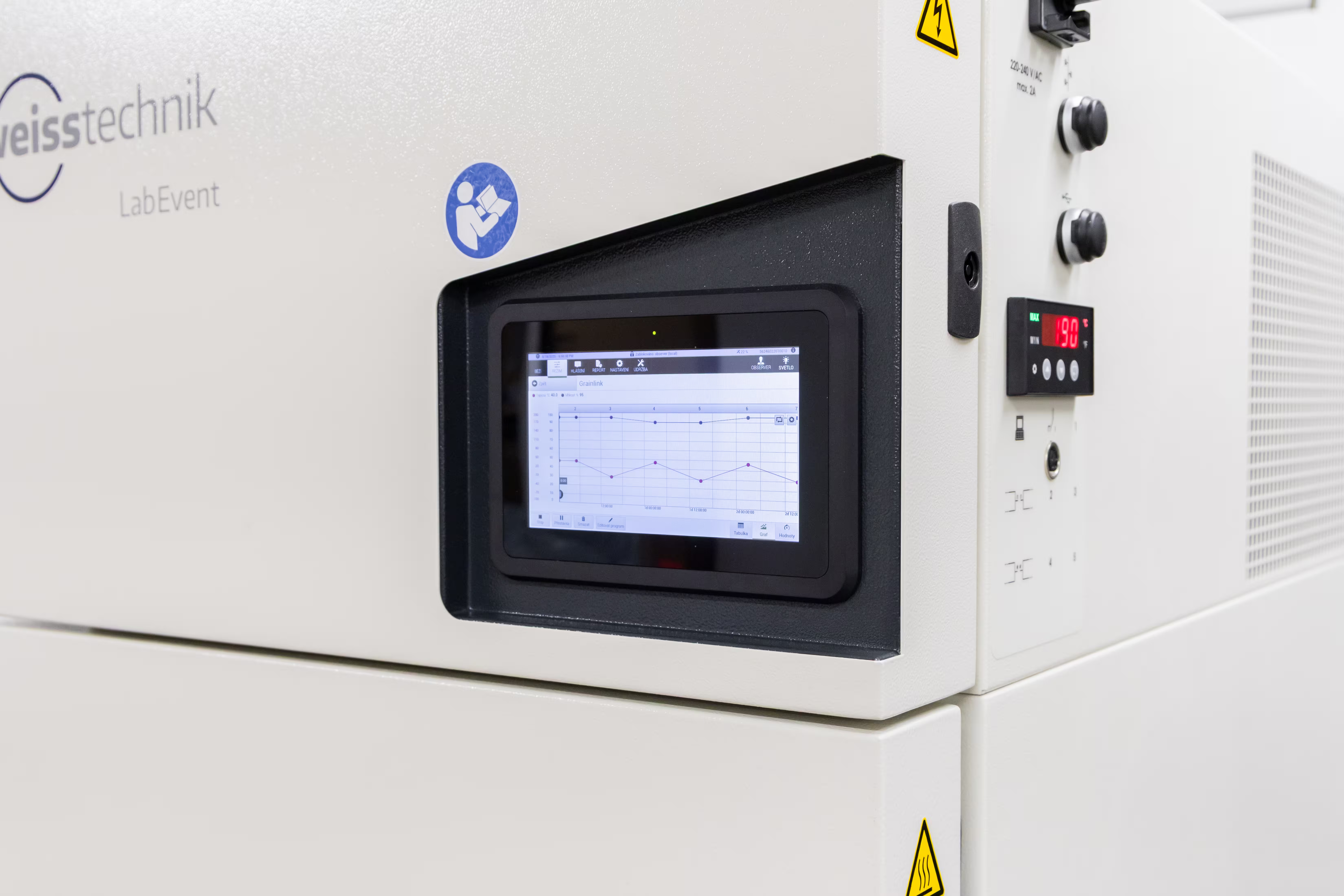
Some of our devices have even been exposed to higher temperatures than we officially declare, yet they continued to operate without issues. You can read more about this in our case study with the Canadian company GrainLink, where our devices face the harsh Canadian climate.
IP Testing
Another testing area is IP protection, where we verify resistance against water and dust ingress. We want to be sure that our devices can withstand heavy rain.
We declare an IP66 rating for the CHESTER model, but actual durability may vary depending on the specific variant and connected sensors. If we want to test a new type of cable gland, light pipe, or other mechanical modification, we use a tank with a depth of 1 meter to verify whether the device meets IP66 or IP67 requirements.
When selecting new components, we carefully ensure that water resistance is not compromised and that we can continue delivering products with the same quality and durability our customers expect.
If you are interested in testing how your own devices perform under extreme conditions or whether they meet IP67 requirements before certification, we offer these services through HARDWARIO Studio for both existing and new customers.
Follow our blog for more insights into our internal processes and testing. Check out our other blog posts if you’d like to learn more about our manufacturing or electronic testing.
Štěpán Danko, Hardware Engineer